Jul 26, 2013

Pakistan

Have you ever noticed that Pakistani flag is so different of the others and still one of most charming national flags in the world?

Let's take a look:


This white hoist makes the flag much more original than the average bichromatic flag, considering it's a very rare composition. Usually, a similar flag would have an unbalanced composition, but the strikingly simplicity of Pakistan flag manages it well.

The flag of Pakistan has a great symbolism, that can be used to explain the history of the country. The flag is based on the All-India Muslim League, that used basically the national flag without its white stripe. The green stripe represents the Islamism (Moghul Empire and the Sultanate of Delhi, some historical rulers of the region, used green flags), the same about the stars and crescent, although it's stated that the former also represents progress, and the latter, light.

The white stripe represents the peace between religions and the religious minorities of the country. Probably, this symbolism was kept from the Indian flag, where orange stands for Hinduism, green for Islamism and white for religious peace. Pakistan flag still represent the Islamic nature of the country, but also the promise for religious tolerance. A nice insight!

Your comments are welcome.

Jul 9, 2013

Libya, Syria and Egypt

After the last post, I received a request to review the flags of Libya and Syria. Suddenly, I gained a very nice topic, as the forks of the themes are surprisingly numerous. I chose one.

I'll start from the Gadhafi-era Libyan flag:


This flag was adopted when Gadhafi was putting the ideas of its "Green Book" in practice. The green color is associated with Islam since the Fatimid Caliphate, that used a green banner similar to the image above. A flag in full green express, then, the total devotion to Islam and the principles of "Green Book".

The flag is evidently simple, striking and easy to be manufactured, but I can't decide if the simplification is exaggerative or not. Some people liked it, others not. Just for curiosity, plain green flags are used in other parts of the world, like Beni, in Bolivia, and Candelaria, in El Salvador, but we can guess they are not related to Islamism.

After Gadhafi's deposition, a new flag was adopted; more precisely, the design is identical to the flag Libya used during its brief monarchy (1951-1969):


The black field and crescent and moon are derived of the Cyrenaica dynasty of the Senussi, that ruled the unified Libya. Red is for the blood shed on independence process, while green is related to the birth of a new country. Notice that the green in this flag has a different symbolism of the one in Gadhafi-era flag.

Now, starting with Syria (but without forgetting Libya), its current national flag:


This flag was originally adopted in 1958, when Syria and Egypt joined the United Arab Republic. The two stars represent, consequently, the two countries that formed the union. A third star was briefly adopted when Iraq tried to join them, but removed when the attempt failed (because Iraqi Ba'athist government was overthrown). The three stars also represented the three pillars of Ba'athism: unity, freedom and socialism. After that, Libya united Syria and Egypt on the then-named Federation of Arab Republics. The stars were then replaced by the hawk of Qureish (the tribe where Muhammad was born). A very similar flag is still used by Egypt, with the exception that the hawk of Quraish was substituted by the eagle of Saladin.

Syria on Federation of Arab Republics - with hawk of Qureish:


Egypt - with eagle of Saladin:


When the two stars were re-adopted by Syria, the symbolism was changed, although still representing the pan-Arabism: it's now a symbol of Arab unity.

Now, a little about the flag currently used by Syrian rebels:


This flag was the same Syria used after its independence. Here you find another connection to Libya, as Libyan rebels used to use the flags of a previous government (now reinstalled as national flag). The three stars represent the French districts of Aleppo, Damascus and Deir ez-Zor, that formed the unified Syria. The symbolism was soon changed, with the three districts being represented by only one star, with the two remaining representing the joining Sanjak of Latakia and Jebel Druze.

Concluding the text, I hope you noticed how much the flag histories of these three countries are connected. Also, I'd like to point that the examples I cited represent an important characteristic of Arab vexillology: the symbolism related to pan-Arabism. In a wider range, even the use of the pan-Arab colors is a result of this tendency, but no countries have showed this so prominently like Syria and Egypt, with the possible exception  of Iraq. If I can guess, I bet it's related to the influence of Arab nationalism and Arab socialism on the policy of those countries. But it's only a supposition, I may be wrong.

Your comments, suggestions and requests are welcome!

Jun 17, 2013

East Timor

Today, we'll look at the flag of one of newest nations in the world: East Timor. Look at this pretty piece:


I remember that the first time I saw the East Timor flag was on a stamp of my country, Brazil, commemorating the first anniversary of the independence of this friend nation, about a decade ago:


At the time, I was slightly more interested in stamps than in flags, but I became immediately curious with the shapes of that flag. I needed more months to found an updated flag section, I can't remember if on an atlas or in the internet.

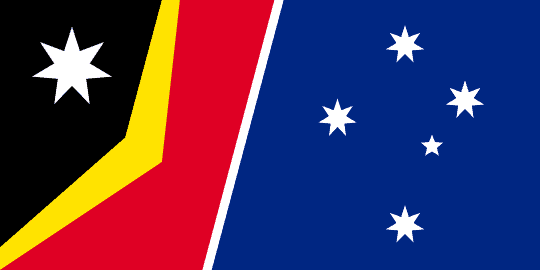
The "boomerang" shape thrilled me, and I still find it very original. Not coincidentally, it's very similar to a proposal to a new Australian flag. The inclined star is also very unique.

Now, a little about the meaning and history of this flag. The flag adopted in 2002 is the same used in 1975, during a brief period of independence. The black represents the "the obscurantism that needs to be overcome", according to official sources, while the yellow triangle represents the traces of colonialism. The red is for the fight for independence, and the white star (on the color of peace) represents the "light that guides". The symbolism, all in all, represents a young nation trying to overcome its problems and build a better future.
 
Your comments are welcome.

Hispanicity / Americas

The flag of the Hispanic people isn't widely seen, in spite of its excellent design and the official status it holds in the whole American continent. Looking at it:


The flag has a white colors, representing peace. The three crosses (known as crosses pattées in heraldry) represent the nao Santa María and the caravels Pinta and Niña, the three ships ceded to Christopher Columbus in the discovery of American continent, as well as the Christianity. They are purple, according to the author of the flag, the Uruguayan army captain Ángel Camblor, in reference to the lion of the kingdom of Leon, later annexed to the Crown of Castile, where the Spanish idiom was developed. The sun represents the Inca sun-god Inti, associated in some countries with the May Sun.

This flag is used in Spanish-speaking Latin America, Hispanic communities in North America, and in Philippines, as an ethnic flag of ethnic people. Its use is most commonly flown in Columbus Day. In those occasions, it's also known as "bandera de la raza" (i.e. "flag of the race").

Moreover, it's officially regarded, in all countries of the continent, as the "flag of the Americas" i.e. as a Pan-American flag independently of ethnic identity, since the seventh assembly of Pan-American Conference, occurred in 1933.

As I said, I think this flag should me much more popular, specially in its use as a Pan-American symbol. Although the flag's symbolism is initially associated with Hispanic ethnicity, some may say Columbus is relevant to the history of the whole continent, and that the sun can be represent the concept of "New World" (as America where known before this name was given) and the liberation process of the continent.

Your comment is welcome. Feel free to comment.

May 20, 2013

England (United Kingdom)

Today's post is inspired by a news that shocked me: the council of Radstock, Somerset, banned the use of St. George's cross (the unofficial, but recognized, symbol of England). The reason is that this flag was used on Crusades, what should offend the Muslim inhabitants of the local, and that it's used by the far right.

About the latter, it's important to remember that every national flag is subject to be used by hatred symbol. Whatever, the biggest polemics is related to the former. The fact that the English flag was originated on the Crusades is irrelevant currently and, on the words of Rizwan Ahmed, spokesman for the Bristol Muslim Cultural Society:
"It is political correctness going a bit too far." 
"Use by the far right is one thing, but to say that Muslims are offended I don't think is correct. We understand the flag is part of this country's heritage, and in fact many many Muslims will identify as being British themselves."
"In actual fact we are normal people. We have a sense of humour and have the same concerns as everyone else – we are not just some single group."
The Saint George's cross:


The Saint George's cross was one of the many flags conceded by the pope to the kings of Europe for being used during the Crusades. Actually, England gained a red flag with a white cross, and France the red cross on white, although they latter exchanged the flags (France latter adopted a white cross on blue).

Here I present a compilation of Crusade flags used during the Crusades to identify nationality (the sources are very confuse, use at your own risk):

  • White cross on red: England (1st), France (2nd).
  • Red cross on white: France (1st), England (2nd), Genoa, Aragon, Holy Roman Empire.
  • White cross on blue: France (3rd).
  • Black cross on white: Brittany, Holy Roman Empire (possibly).
  • Green cross on white: Flanders.
  • Yellow cross on white: Italy, Holy Roman Empire (possibly).
  • Blue cross on white: Portugal (possibly including Galicia).

By the way, the association between the cross and St. George possibly occurred on Genoa, on 12th century,  that also adopted the flag and the patron saint in same period.

I hope you liked the post. If you have any comment about England flag or the incident on Radstock, leave your comment, please.

May 8, 2013

Canada

Today's post has two objectives: firstly, talks a bit about the current Canadian flag and its origin and, finally, comment a news related to this flag.

Until 1965, Canada used this flag:


Then they finally changed to current flag:


Between 1963 and 1965, occurred what was called the "Great Canadian Flag Debate", that gained popular repercussion after Lester B. Person, then prime-minister, proposed that Canada should change its flag. In the end, the right above flag won the debate.

Differently of current absolute acceptance of the maple leaf flag, there were, on the times of the adoption, a loud opposition, fearing that flag change would lead Canada to became a republic and leave the Commonwealth. Until now, fortunately or unfortunately, it never occurred.

The new Canada flag is much simpler, original and distinctive than the older flag, and became so popular that reverting it would cause popular un-satisfaction. Canada flag change happened to create what's called Canadian pale, posteriorly adopted by many Canadian territories and towns.

Now the second part, as promised on first paragraph... since Sunday (May 5th 2013), Canadian naval jack is the new naval ensign, and the naval ensign is the new jack i.e. they exchanged places. The old naval ensign, now the naval jack is the national flag; the new naval ensign (the old naval jack) is the following:


I think the change makes Canada nearer of the standard. Usually (specially on Commonwealth countries), the naval ensigns, by major influence of the United Kingdom, takes the national flag on the canton (what now happens). The jacks use to have simpler designs and, in countries where the naval ensign is different of national flag (like Canada), the national flag is the jack. So I totally agree with the change, as the things makes more sense now.

You may be questioning: what have really changed? According to international protocol, jacks are flown on the bow (front), while the ensigns are flown on the main mast (on sea) or in the stern (if the ship is anchored, moored or alongside).

Please, leave a comment. Your opinion is welcome.

Apr 25, 2013

The history of Chinese flags

Flags are changes sometimes. Usually, it's because of a change of perception about the represent subject. I'll talk about it using the People's Republic of China (mainland China, not Taiwan) as example.

I'll take, as starting point to my explanation, the flag of China used between 1890 and 1911:


At the time, China was ruled by the Qing Dynasty (of Manchu ethnicity). Yellow was traditionally the imperial color of China, and the imperial family was the only that could use that color on clothes and buildings. The dragon has a well-known symbolism in Chinese culture, and the five-clawed one, like in the flag, was associated with the emperor. The red disc on the superior left is a flaming pearl, common on depictions of the Chinese dragon. It's someway related to the "Eight Banners" adopted by Manchu military organization.

In 1911, the China became a republic, after the Wuchan Uprising, and the flag was de facto replaced by the flag used by the rebels:


The eighteen disc represent the then eighteen provinces of China. There's a variant of this flag with a nineteenth star on the center of the star.

In 1912, a new flag was formally adopted; the Wuchan Uprising flag was kept as the Army flag until 1928. See it:


This flags was highly related with the new ideology of the Chinese policy, known as "Five Races Under One Union". Although the flag was intended to show certain harmony between the five races, they were placed in a order that shows a kind of ranking on Chinese society: red for the Han (the most numerous ethnicity on China), yellow for Manchu (notice the reference to first flag on post), blue for Mongols, white for the Hui (Muslims on China) and black for Tibetans.

The five-colored flag was used until 1928, with the exception of a brief period between 1915 and 1916, when occurred an attempt to restore the Chinese Empire. Two flag variants were used on that period:


The colors have the same symbolism, but now the Han ethnicity (represented by red color) takes a much more salient position on the flag.

In 1928, a new flag was adopted:


The flag replacement is again resulted by a radical change on policy. Between 1916 and 1918, in an event known as Northern Expedition, Chinese nationalists fought for the "reunification" of China through the disestablishment of local warlords. Red represent the blood of the martyrs that fought against Qing dynasty; the twelve-rays white sun on blue background represents the progress, symbolized by the twelve months and the twelve traditional Chinese hours (the shíchen), and was used as the symbol of Kuomintang party.

In 1949, with the result of Chinese Civil War, the troops of Chiang Kai-Shek were relocated to Taiwan islands and established the Republic of China (ROC), that still uses the 1928 flag, while the communists, led by Mao Zedong, established the People's Republic of China and adopted a new flag, still in use:


I don't need to explain that the red prominence is related to communism, do I? Also, there are five yellow stars, whose color may refer to the "yellow race" of the Chinese. The biggest star represents the Communist Part of China (CPC), representing the great "savior" of China. The four smaller stars represent the four constituent parts of the Chinese society: the rural workers, the proletariat, the urban petit bourgeoisie and the national bourgeoisie (whose representation on flag was controversial at the time). There's an alternate interpretation, probably dubious, that says the bigger star is for the Han ethnicity while the other stars represent the other four "races" of 1912-1928 flag.

So the Chinese flag changed from imperial to republican, then to representative, so then to nationalist and now to communist. Flags changed for ideological purposes, because they were all pretty cool, aesthetically and vexillologically.

Hope you liked the historical tour. Feel free to comment!

Apr 10, 2013

Worcestershire (United Kingdom)

 The county of Worcestershire adopted a new flag on the 8th day of this month. See it:
The flag was adopted after winning a poll conducted by BBC Hereford & Worcester, among the more than 400 entries. The winner designer was Elaine Christine Truby. Although my personal favorite on the competition was other, I can't see reservations against this flag.
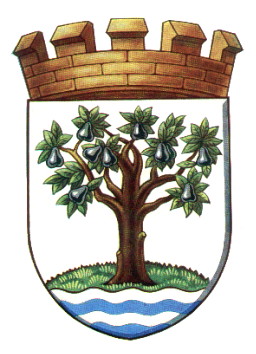
The main feature of the flag are the black pears, a variety of pears original of the county, and with large history of representation of Worcestershire. A pear tree with fruits was used to represent the county on the Battle of Agincourt (1415), according to Michael Drayton's poem. The three black pears were added to the coat of arms of city of Worcester in 1575, after the Queen Elizabeth I saw a black pear tree planted in her honor during a visit to the region. The black pears also appear on council's coat of arms and county cricket team badge.

The rest of the flag is very standard: green for the hills and blue for the rivers, specially the River Severn that crosses the county.

The flag was yet adopted, registered on UK Flag Registry and flown on the cathedral of Worcester.

Comments are welcome!

Apr 4, 2013

Anonymous (group)

I've been seeing this flag very much on the last times. You could have saw it and never noticed. I'm talking about this flag, specifically:


This is a flag of an activist group called Anonymous. You probably have yet found its motto in a vandalized webpage:
"Knowledge is free. We are Anonymous. We are legion.We do not forgive. We do not forget. Expect us."
They are present in initiatives off-line, like the Occupy Wall Street, and on-line, when released a list of names and personal data from people related with virtual pedophilia and cyber-bullying. For its legion of computer hackers, its activities are known as "hacktivism".

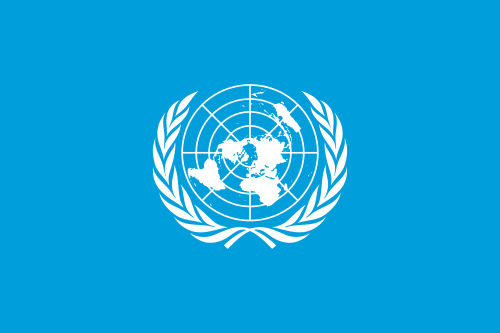
This flag has some very curious aspects, in vexillological point of view. The logo of the group recalls the word "Anonymous" and, more surprisingly, has an incredible resemblance with United Nations logo: notice the globe and exact same arrangement of the olive branches.

I couldn't find the symbolism of colors black and green. It can be related to "green anarchism" (anarchism + enviromentalism), an ideology that Anonymous usually defends, although the flag of anarcho-syndicalism defaced with Anonymous logo is also used (see). I have a theory, although I can't prove it: the colors are inspired, conscious or unconsciously, on the old green phosphor monochrome monitors.

Other very curious flag associated with Anonymous group is this:


The anarchist ideas of Anonymous and group's relation with piracy (in contemporary meaning of term) make the Jolly Roger an obvious symbolism (see post about pirate flags). However, they changed the traditional skull by the mask of Guy Fawkes, made famous by V for Vendetta and used by members of the group where anonymity is necessary.

If you know additional information about Anonymous flags or want to make any other kind of commentary, feel free to comment.

Mar 27, 2013

Easter Island (Chile)

Easter Day is next Sunday, and, as I think I won't post again until then, I believe it's an excellent occasion to talk about the very curious Easter Island flag, and try to answer why it hasn't a moai.

The Easter Island is a province of Chile, located in Valparaíso region, constituted by a single namesake commune. The flag of Easter Island is, actually, the flag of rapanui people, although it's widely flown as unofficial flag of both the commune and the province. See it:


Surely no moais. It represents a reimiro, a pectoral ornament whose formant remembers a crescent moon with two characteristic human faces on each extremity or a ship with their own figureheads (reimiros in other shapes also existed). Its meaning and use is unknown, although it possibly was only use by noble women on ceremonial occasions or rituals. It represents, therefore, nobility and authority.

Between 1876 and 1888, this flag was used instead:


The difference in this flag are the four manutaras (Onychoprion lunatus, or spectacled terns), birds with an important role on local mythology.

And why not the moais? To explain it, we should explain the political context where the moai were created. The island inhabitants were divided in two classes: the "long-ears" (the nobles) and the "short-ears" (the commons). Moais were probably made to satisfy the ancestors of the "long-ears"; to made them, the "long-ears" enslaved (yes, it's the correct word) the "short-ears". In the end, during a rebellion, all "long-ears" were killed. And it's the main reason of because the moais are absent of the flags: they are symbol of a shameful past of slavery and oppression, according to the theory of Ron Fischer on its work "Easter Island Brooding Sentinels of Stone".

Happy Easter to all! Feel free to add a comment!